Kaan · The Officer's Manual
2026-02-24
There is only one metric that matters in the fog of war: Conversion
One word, conversion. Are you paying buckets of cash to acquire one customer? Good. Let's discuss how not to do that.

First things first, Lead Generation.
How and where you get the customers is important. You can either use your rolodex for this, or you can use tools to get to the right people.
But what do we mean by right people?
It's not age most of the time, it's the occupation, location and further interests that make conversions happen.
You sell to businesses? Focus on business decision makers (VP, CEO, Director). You sell to customers? Focus on location and demographics.
Most important, how do you get data
This is data enrichment, the very topic a multitude of billion dollar companies are working towards making this an optimization problem rather than one of lack of information. Who would pay for the highest quality data, who could gather more data on their own?
You have to make sure that anything that you have that is proprietary is used in the best way possible. You have location data on your customers, good. You have spending habits, great.
You put all of these different data points together to make it so you have a better way of representing your customers.
And then the silver bullet, how do you reach more of these customers
Is it going to be an email campaign? Is it going to be through social media, through post or messages which one? What tools will you use and what channels will you take advantage of.
Where do your customers hang out? Online or offline? You should consider type can you reliably take advantage of. Keep metrics, else you're just gambling.
The case for the gamblers:
It's not a game of luck but you can consider it as one, everyone is putting coins in, some are hitting a jackpot (closing sale, getting customers) while the others are making the house richer. One should aspire to be the house in this situation.
Given that you cannot become Meta overnight, you need to want to become an environment where deals thrive and people connect. To construct this you need trust and legitimacy.
Introduction to the problem statement:
Conversion is a mechanical process. If you are burning capital to acquire a single customer, your machine is broken. Most go to market motions today operate on a volume first bias: buy a list, load a sequence, hit send. But the unit economics of this approach have now collapsed.
Problem constraints
- Capital Inefficiency: Every outreach motion has a fixed cost (tools, labour, time). When conversion rates sit at 0.1%, you are actively financing the 99.9% of ignored attempts.
- Infrastructure Burn: Modern email and social algorithms aggressively penalize low relevance outreach. Firing blindly doesn't just waste time; it destroys your domain reputation and your future ability to sell.
- The Intent Deficit: Enterprise buyers are already 80% through their decision making process before they ever respond to a vendor. You do not just need to know who they are; you need to know exactly when they are bleeding.
Rigorous proof:
Let's look at the raw mechanics of a modern go to market motion:
- Every untargeted email, call, or ad you deploy has a cost. Not just in capital, but in reputation. As your blind volume increases, your conversion rate drops because the market flags you as spam.
- Enterprise buyers are overwhelmed with undifferentiated choices. They only respond to hyper specific relevance or unrefusable deals.
- Deep data enrichment is the only lever you have to force relevance. It turns a cold guess into an informed strike.
- Therefore, to maximize revenue without burning your treasury, you must prioritize target quality over target volume.
You do not need more leads. You need better coordinates. A sniper with one bullet is infinitely more effective than a blind man with a machine gun.
Of Thrones and Bonds:
Legitimacy is easier achieved than trust, go for this first.
A couple of wins will make whatever you're trying to establish, a lot more legitimate. And on this case when you have that base level, you need to take the next step: strategic partnerships.
What this means is that to keep people coming back and to make it so you're building something real, you team up.
And when you team up do not consider this as a long term investment, it's to get you through a threshold.
Some call this the cold start problem for products and platforms. You can make use of this cold start problem since being under the wing of someone bigger and more altruistic is nearly a 100% of the time better than a flock of infant birds trying to hunt for their own.
First comes the threshold then comes the hunt.
Then the only advance becomes an all out offensive.
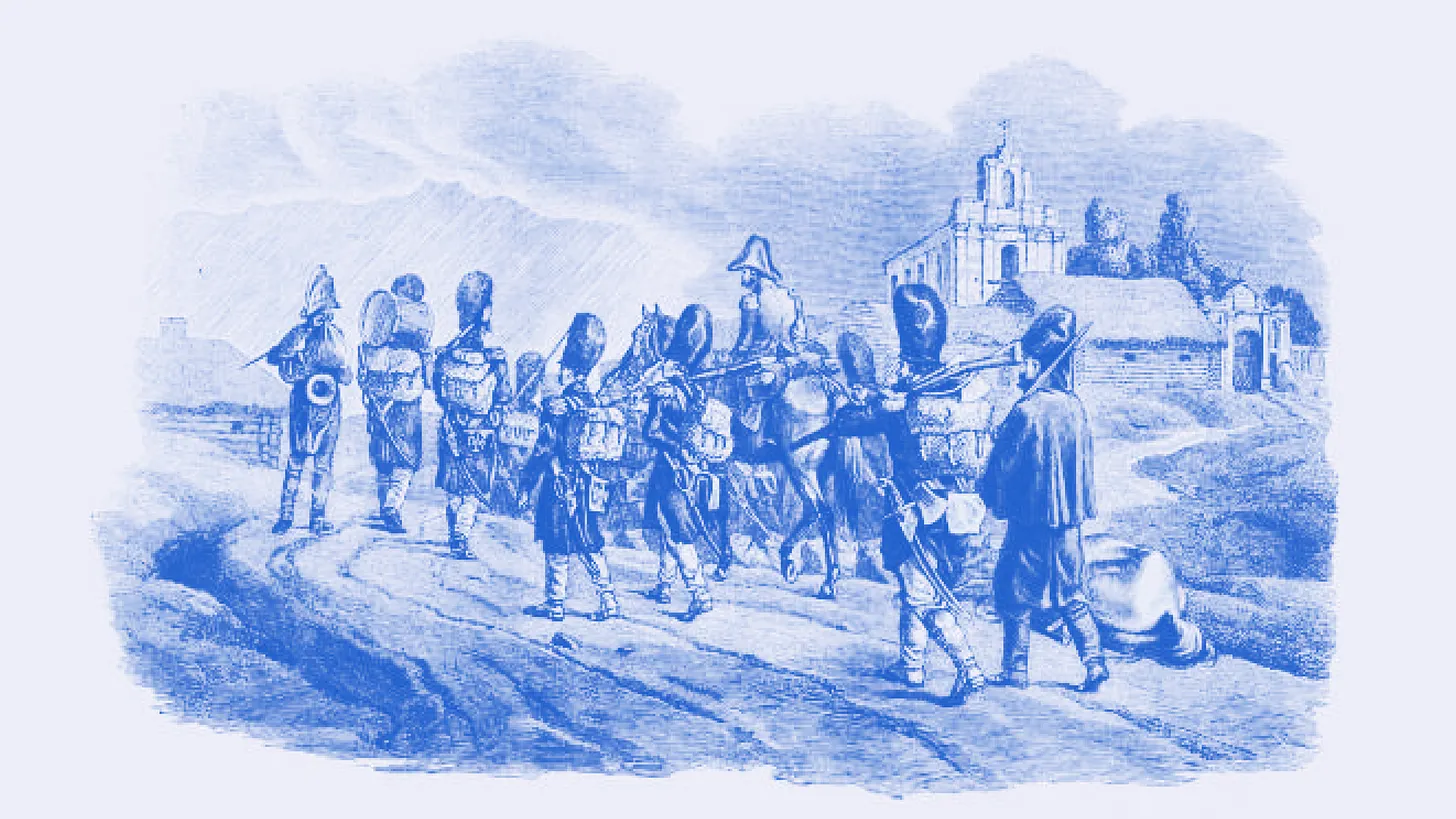
Tips and Tricks from the Officer's Manual (Napoléon's)
He made sure that all soldiers were equipped with the means to be self sufficient and to take camp in any situation.
He led large armies, went through insane attrition situations. Most companies (both army and startups) die in these extreme situations.
A way to make your extremities more self sufficient, will make it so you're more versatile and can move faster. In Napoléon's case it made him able to conquer most of Europe because of the decisiveness of his manœuvres and his strength in artillery combat.
Oh on that note.
Artillery Combat:
Napoléon started his career in the artillery corps, this is where he levelled up artillery made great difference in his offensives.
The term "Napoleonic Warfare" comes from this use of artillery.
Inside the concept of GTM, the artillery becomes your outreach operations. Multi channel, consistent, intent based.
Figure out who you sell to and completely bombard everyone with value add until you close clients. Focus power, create more value add for people who show interest. Keep their attention on you, make it so they have to think about you before they take a decision. Just like the artillery would morph the decision making of late 18th century generals.
Hit everything in sight and do not hold back ammunition. Your livelihood is on the line.
Any shell that is not a sure hit gets the enemy closer to you, your land would be in peril; the data you use has to be trustworthy, your outreach should be flawless.

Takeaways
Who are your customers, how do you reach them?
Who exactly are you shooting at? Do not rely on generic job titles or broad demographics. Look for intent signals: who is hiring? who just raised funding? who is bleeding cash? Gathering enriched, proprietary data is the difference between a direct hit and a total waste of ammunition.
Borrow Legitimacy.
Do not try to beat the house when you are just starting out; team up with the house. Find an ally who already owns the trust of the audience you want. Partner up to survive the "cold start" winter, establish your base level of legitimacy, and position yourself for the offensive.
What is your line of attack?
Once you have the exact coordinates and borrowed trust, do not tap the market politely. Concentrate your fire. Synchronize your attacks across the channels where your targets live, and provide them with undeniable value until they are forced to make a decision.
This was a bit too warfare metaphor heavy, I hope you appreciate the brief history lesson. For the ones that do not know history are doomed to repeat it.
Keep cool,